Fellowship Program
The Center of Resuscitation Science offers an intensive 3-year fellowship through an NIH-funded T32 training grant which provides rigorous training for a career in translational research in resuscitation medicine. The overarching goal of this fellowship is to develop a cadre of new junior investigators whose research focuses on the etiology, pathophysiology, and treatment of potentially lethal conditions requiring resuscitation such as cardiac arrest, septic shock, other shock states, and ARDS. The training provided by the fellowship is multi-disciplinary, with elements spanning the various specialized disciplines in emergency medicine and critical care. Fellowship training takes place primarily at BIDMC, but the program also leverages the world-class expertise and resources of additional faculty members based at Mass General, Brigham and Womens Hospital, MIT, and Boston University Hospital. Fellows will have the option to pursue primarily epidemiologic (big data queries), clinical trials, or lab-based work, but will acquire a working knowledge of all 3 approaches. Each fellow will choose an area of expertise and focus their efforts in this area, but will also be encouraged to collaborate with investigators using different approaches and thus will have ample opportunity for exposure to the full range of translational resuscitation research.
Led by Director Michael Donnino MD and Co-Directors Samir Parikh MD and Murray Mittleman MD DrPH, the program’s faculty mentors are nationally and internationally recognized investigators in various elements of resuscitation science who are actively engaged in translational research using clinical trials, epidemiology/big data, or laboratory research. As a whole, the faculty has thousands of peer reviewed publications, with many in high-impact journals including Nature, The New England Medical Journal, and JAMA. The program’s faculty mentors are equally adept at training junior investigators, having won numerous teaching awards and serving as primary or secondary research mentors for >80 NIH and foundation mentee-driven training awards.
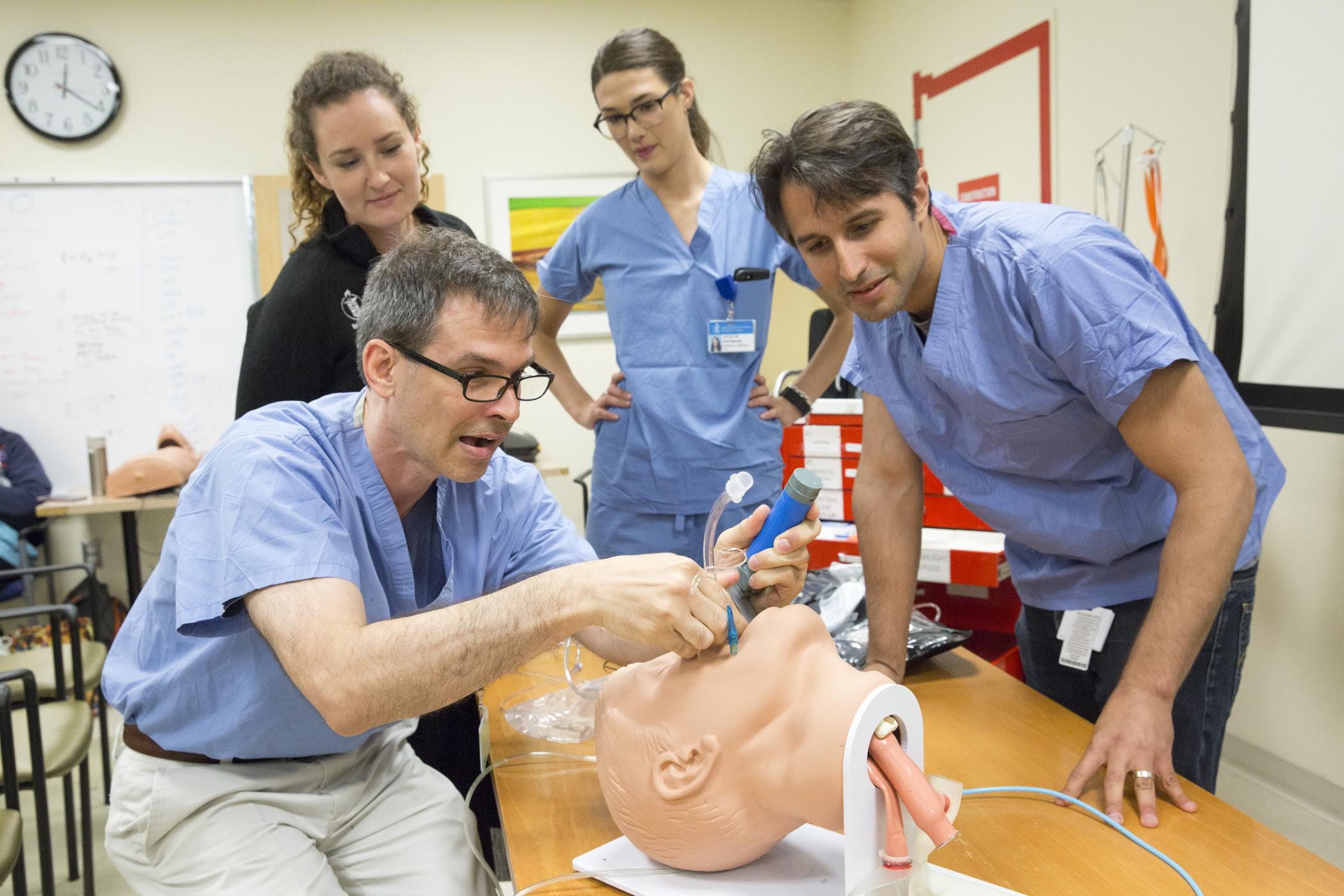
Through this 2-3 year experience, fellows will obtain both didactic and practical training in resuscitation research. The didactic components will include mandatory coursework to provide all fellows with the same base knowledge, more advanced specialized coursework to further the knowledge base in a specific area of interest, and participation in laboratory meetings, departmental and fellowship seminars, and regional and/or national emergency or critical care conference to hone critical thinking and presentation skills. The practical training will include up to 2.5 years of mentored research under the supervision of our faculty mentors, including a primary mentor and an overseeing mentorship committee. Research projects will depend upon which track the fellow enters. Clinical trials fellows will “take over the reins” of an existing clinical trial or sub-study, epidemiology fellows will conduct one or more epidemiological studies using the extensive number of large datasets accessible by the program, while laboratory science fellows will undertake a lab-based project. Research projects will be designed to be feasibly completed during the fellowship period and will necessarily involve collaboration with investigators who specialize in different approaches. To round out both the didactic and research components, there will also be frequent one-on-one meetings with a primary mentor and quarterly meetings with a mentorship team chosen to provide an overall broad training regimen.
The fellow’s T32 experience will culminate with the preparation and submission of a mentored grant proposal to the NIH or a foundational research sponsor. Typical grants of this type include NIH K- and F-series grants as well as foundational equivalents. This grant submission, if successful, will aid the fellow in a seamless transition to the next phase of their academic investigative career. Previous fellows trained by program’s faculty mentors have an exceptional track record in obtaining this sort of mentored funding.
The T32 Resuscitation Science Research Fellowship is open to both MDs and PhDs. Eligible MD candidates include physicians and research fellows specializing in emergency medicine or critical care-related disciplines (adult or pediatric) who have completed at least 3 years of residency. Eligible PhD candidates are postdocs interested in epidemiology and translational research pertinent to resuscitation. In either case, the ideal candidate would be seeking NIH funding following completion of this fellowship with the intent of pursuing an academic research career in resuscitation science. Candidates will be evaluated based on past research experience/performance, academic record, and a subjective evaluation of their potential for leadership in resuscitation research. Candidates must be a US citizen or a legal permanent resident of the US.
Please click here to meet our current fellows. Interested applicants should click the "Apply Now" button at the top right of this page. We request applicants submit two reference letters, as well. The deadline for applications is December 1st.
Thanks for considering applying to our program.
Michael W. Donnino, MD
Director of Center for Resuscitation Science
Associate Professor of Emergency Medicine and Medicine, Harvard Medical School
Attending Physician of Emergency Medicine and Critical Care Medicine, BIDMC Boston, MA
 The overall goal of the training program is to provide advanced training in resuscitation research to physicians or scientists such that they can develop into independent investigators in the field of resuscitation medicine. This overall goal can be divided into a series of objectives as below:
- To provide training in clinical trial design and execution in resuscitation research.
To achieve this goal, we have scheduled didactics, hands-on experience, interaction with senior investigators, and one-on-one training such that the fellow will be well-versed in clinical trials research. - To provide advanced training in resuscitation research for big data analyses.
To achieve this goal, fellows will be trained in both basic and advanced statistical analysis. They will have the opportunity for big data analyses through some of the ongoing work that we are doing with Get With the Guidelines from the American Heart Association as well as other sources. - To provide training in mitochondrial metabolism as this pertains to resuscitation.
To achieve this aim, fellows will be exposed to our lab investigating mitochondrial metabolism as this relates to critically ill patients and states. We have active translational studies for which fellows can learn how to incorporate findings at the bench to the bedside. Lab training will include our standard didactics plus work with Xiaowen Liu, PhD and laboratory director.
Resuscitation Research fellows will have exposure to all three components of the research operation but will generally concentrate in one (or possibly two) areas. The fellowship consists of structured didactics/curriculum supported by a “hands-on” project (s) led by the fellow. Mentors include the faculty from the Center for Resuscitation Science as well as external mentors within BIDMC and the Harvard system.
Each fellow is required to submit a minimum of one publishable manuscript for peer review at or around time of completion of the fellowship. Fellows will have a Harvard appointment and will have time allotted for travel to national (or international) conferences to present their work. Applications must be either citizens or permanent residents of the United States.
 Our didactics are designed for a broad-based understanding and advancement in translational research. Topics covered during our research lecture series include but are not limited to:
- Biostatistics – Basic and Advance
- Translating Ideas into Investigation
- Basics of Clinical Trial Design
- Execution of Clinical Trials
- Nuts and Bolts of the IRB
- Challenging Study Design
- How to obtain an Investigational New Drug and when do I need to do so?
- Data Safety and Monitoring Boards
- Database Management
- Graphs, Tables, and More: displaying data with style
- Manuscript Writing
- Grant Writing and Funding Success
- Research Ethics
- Bench to Bedside and Bedside to Bench: How to incorporate lab-based work into clinical investigation
- Basics of Mitochondrial Metabolism
Michael Donnino, MD. Professor of Emergency Medicine, HMS
Program Director. Clinical Trials and Epidemiology/Data Science.
Dr. Donnino founded and leads the internationally respected Center for Resuscitation Science at BIDMC, which conducts interventional clinical trials and epidemiological/data science studies to gain a better understanding of treatments for cardiac arrest, sepsis, COVID-19, and diabetic ketoacidosis. He has a longstanding interest in mitochondrial dysfunction and is at the forefront in the area of metabolic resuscitation in critical illness. Dr. Donnino is also actively involved in national/international guideline development for cardiac arrest-treatment protocols. Holder of an NIH K-24 research mentoring award, he is an award winning teacher and highly accomplished research mentor who has trained numerous research fellows including 6 recipients of NIH K or foundational-equivalent mentee-driven research training grants.
https://connects.catalyst.harvard.edu/Profiles/display/79337
Samir Parikh, MD. Professor of Medicine, HMS
Program Director. Laboratory Science.
Dr. Parikh’s research group conducts cutting edge laboratory science studies which seek to identify endogenous mechanisms of resistance to acute physiological stresses such as sepsis, acute respiratory distress syndrome, and acute kidney injury. He nationally and internationally known for his line of investigation concerning the role of the Tie2/Angiopoitin axis in the vascular response to infection and for his studies examining how impaired mitochondrial biogenesis regulation and resultant deficiencies in vitamin B3-derived cofactors contribute to mitochondrial dysfunction and impaired mitochondrial biogenesis in kidney disease and aging. Dr. Parikh has a superb multi-dimensional track record in mentorship, including multiple training-related administrative leadership posts, four teaching/mentoring awards, and mentorship of numerous research fellows, ten of which are at the associate professor level or higher.
https://connects.catalyst.harvard.edu/Profiles/display/Person/60883
Murray Mittleman MD, DrPH. Professor of Epidemiology, HSPH; Associate Professor of Medicine, HMS
Program Director. Epidemiology/Data Science.
One of the co-developers of the case-crossover epidemiologic study design, Dr. Mittleman is nationally and internationally known for his epidemiological/data science studies focusing on behavioral, dietary, and environmental precipitants/triggers of acute cardiovascular events, as well as the prognosis of these events after they occur. Among his many lines of investigation, he has a particular interest in the acute cardiovascular risks caused by air pollution. Dr. Mittleman’s research group is also involved in clinical trials to rigorously evaluate the results of observational studies. Dr. Mittleman is the Director and Chair of the MPH program at the Harvard School of Public Health and has trained over 40 postdoctoral fellows, many of whom are now in leadership positions in the US and internationally.
https://connects.catalyst.harvard.edu/Profiles/display/Person/23205
Michael Agus, MD. Associate Professor of Pediatrics, HMS.
Faculty Mentor. Clinical Trials.
Dr. Agus is the Founding Chief of the Division of Medical Critical Care within the Department of Pediatrics at Boston Children’s Hospital and an accomplished pediatric clinical trialist. He is a pediatric intensivist and endocrinologist. His principal research efforts are aimed at addressing unanswered questions concerning endocrine homeostasis and electrolyte disturbances in critically ill children, most recently the value of tight glycemic control. He is well known for his leadership in seminal clinical trials evaluating euglycemia in post-operative pediatric cardiac surgery patients and subsequently in non-cardiac pediatric ICU medical/surgical patients. He currently leads a trial evaluating the efficacy of hydrocortisone in pediatric septic shock, all at Boston Children’s Hospital. Dr. Agus is an award-winning teacher and Faculty Co-Director of the Academy of Clinical Investigation for the Boston Combined Pediatrics Residency Program. He has been an HMS Clinical Research Mentor continuously since 2002, during which time he has trained a number of highly successful mentees.
https://connects.catalyst.harvard.edu/Profiles/display/Person/83535
Rebecca Baron, MD. Associate Professor of Medicine, HMS
Faculty Mentor. Clinical Trials and Laboratory Science.
Dr. Baron’s translational research program at Brigham and Women’s Hospital focuses on human acute respiratory distress syndrome and murine models of acute lung injury and sepsis with major lines of investigation exploring the role of inflammation and cell stretch in lung injury and the identification of disease state biomarkers. Her animal studies align with human studies, and her laboratory maintains large, well-characterized biorepositories of samples from critically ill patients. Analysis of samples from this biorepository has contributed to multiple collaborative investigational studies. Dr. Baron has won multiple mentoring awards, and her laboratory is proud to count K awardees and many MD, PhD, and fellowship program awardees among its trainees.
https://connects.catalyst.harvard.edu/Profiles/display/Person/47642
Katherine Berg, MD. Assistant Professor of Medicine, HMS
Faculty Mentor. Clinical Trials and Epidemiology/Data Science.
Dr. Berg is associate director of the Center for Resuscitation science and in this capacity conducts clinical trials and epidemiological/data science studies in cardiac arrest, sepsis, and aerobic metabolism. Her primary research interest centers on interventions which can improve cellular oxygen consumption after cardiac arrest. She is also a national and international leader in cardiac arrest guidelines, currently serving as vice-chair of the Advanced Life Support task force at the International Liaison Committee on Resuscitation and the adult cardiac arrest guidelines writing group at the AHA. A rising presence in the resuscitation community who is still early in her career, Dr. Berg has mentored a K23 awardee and several Center for Resuscitation Science fellows, residents, and medical students interested in critical care research on projects which have led to publication.
https://connects.catalyst.harvard.edu/Profiles/display/Person/25308
Carlos Camargo, MD, DrPH. Professor of Emergency Medicine & Medicine, HMS; Professor of Epidemiology HSPH.
Faculty Mentor. Epidemiology/Data Science.
One of the most productive clinical investigators in the US, Dr. Camargo is nationally and internationally recognized for his research in multiple areas, including respiratory/allergy emergencies, causative roles of nutritional factors in respiratory/allergy diseases; and health services research in emergency care. Dr. Camargo is chief of the Emergency Medicine Network (EMNet), which is comprised of 247 different hospitals and also conducts analyses of large administrative data sets. Current EMNet projects include studies of various aspects of COPD and the epidemiology of COVID-19. Dr. Camargo is also an award-winning mentor and educator, with over 30 of his mentees receiving NIH K-series or foundational/institutional equivalent mentored training awards and several achieving the rank of full Professor in academic medicine.
https://connects.catalyst.harvard.edu/Profiles/display/Person/25636
Leo Anthony Celi, MD, MS, MPH
Associate Professor of Medicine, HMS (Part-Time) Principal Research Scientist, MIT Faculty Mentor
Data Science
Combining his roles as the Clinical Research Director at the MIT Laboratory for Computational Physiology (LCP) and attending critical care physician at BIDMC, Dr. Celi takes “big data” and machine learning approaches to analyze data routinely collected in the process of care. Dr. Celi’s group at the LCP maintains several open-access electronic health record databases, including the Medical Information Mart for Intensive Care or MIMIC from BIDMC and the Philips-MIT eICU Collaborative Research Database. Together, these databases have over 20,000 users from around the globe, and now provide the raw data for 1-3 publications per month. Dr. Celi is an award-winning mentor whose past and present mentees include over 30 residents, PhD post-docs, MD fellows, and attending physicians. https://connects.catalyst.harvard.edu/Profiles/display/Person/58103
Joshua Goldstein, MD, PhD, PhD. Professor of Emergency Medicine, MGH
Faculty Mentor. Clinical Trials. Director of the Center for Neurologic Emergencies at MGH, Dr. Goldstein’s research program integrates neurology, hematology, neurocritical care, and emergency medicine. A major focus is large national clinical trials in emergency conditions such as seizure, traumatic brain injury, and stroke, with a major focus on the acute management of patients with intracerebral hemorrhage (ICH).
https://connects.catalyst.harvard.edu/Profiles/display/Person/58531
Fumito Ichinose, MD PhD. William T. G. Morton Professor of Anesthesia, HMS
Faculty Mentor. Laboratory Science.
Based at MGH, Dr. Ichinose conducts ground-breaking research focused on the molecular mechanisms responsible for the hypoxia-induced cerebral dysfunction and injury often encountered in patients after cardiac arrest. He has a longstanding interest in artificial hibernation and the protective effects of gaseous mediators such as nitric oxide and hydrogen sulfide on brain function during ischemia.
https://connects.catalyst.harvard.edu/Profiles/display/Person/27897
Monica Kleinman, MD. Associate Professor of Pediatric Anesthesia, HMS
Faculty Mentor. Clinical Trials.
Dr. Kleinman is Medical Director of the Medical/Surgical ICU at Boston Childrens hospital and as such has extensive clinical expertise in the realm of resuscitation and prevention of clinical deterioration and cardiac arrest in hospitalized children. She leads longstanding trials in progeria, a rare premature aging disease which often results in cardiovascular complications similar to those in aging adults, and is actively involved in clinical guideline development for pediatric advanced life support with the AHA and ILCOR. Dr. Kleinman instituted the AHA training center for Advanced Pediatric and Adult Life Support at BCH, and has won several teaching awards for training residents as well as a sustained record of effective mentorship for pediatric research fellows. Dr. Kleinman instituted the AHA training center for Advanced Pediatric and Adult Life Support at BCH, has won several teaching awards for training residents and demonstrated a sustained record of effective mentorship for successful pediatric research fellows.
https://connects.catalyst.harvard.edu/Profiles/display/Person/72317
LONG NGO, PHD. Associate Professor of Medicine at HMS, Associate Professor of Biostatistics at the Harvard T.H. Chan School of Public Health
Faculty Mentor. Biostatistics/Epidemiology/Data Science.
Dr. Ngo is Co-director of Biostatistics for the Division of General Medicine and Primary Care at BIDMC. Dr. Ngo collaborates with investigators in diverse clinical areas and mentor a group of analysts, fellows, and junior faculty members. Dr. Ngo’s statistical acumen has solidified the conclusions for clinical and biomarkers studies for risk stratification in ED patients with sepsis, randomized controlled trials of thiamine in ED patients with septic shock. Dr. Ngo’s research expertise and interests include assessment of methods of delirium screening and modeling, diagnostic accuracy applications in radiology, competing risks in survival analysis of elderly women with breast cancer, longitudinal analysis in survey design studies, and recently studies with high dimensional data using proteomics technology.
https://connects.catalyst.harvard.edu/Profiles/display/Person/34969
Nathan Shapiro, MD, MPH. Professor of Emergency Medicine, BIDMC
Faculty Mentor. Clinical Trials.
Dr. Shapiro is a national/international leader in the Emergency Medicine research community, especially in the diagnosis and treatment of patients with sepsis and septic shock. He is best known for his translational research in which he made extensive use of biomarker diagnostic technologies and non-invasive hemodynamic monitoring techniques to explore the restoration of endothelial cell health and microcirculatory flow during resuscitation from septic shock. His expertise in the practical aspects of implementing studies that recruit from the often-challenging ED and ICU environments has contributed to the success of BIDMC as a national leader in acute care research. Dr. Shapiro’s strong training in research and statistical methodology in addition to a strong working knowledge of preclinical techniques and practices have allowed him to bridge the bench-to-bedside gap and made him a valuable mentor to over 20 residents, research fellows, and junior faculty members. A majority have continued on in academic medicine or taken clinical or commercial leadership positions
https://connects.catalyst.harvard.edu/Profiles/display/Person/17353
Bruce Spiegelman, MD, PHD. Stanley J. Korsmeyer Professor of Cell Biology and Medicine, HMS
Faculty Liaison, Harvard Medical School. Laboratory Science.
Dr. Spiegelman is a passionate researcher and one of the leading authorities on mitochondrial biology, in particular the role of mitochondria in the molecular regulation of white and brown fat development. He discovered crucial regulatory enzymes of adipose synthesis and metabolism (PPARγ, PGC1, and PRDM16), established the link between adipose tissue, obesity, and low-grade chronic inflammation, and uncovered new roles for the PGC1 transcription factors in the regulation of mitochondrial function. Dr. Spiegelman has trained over 45 post-doctoral fellows since establishing his laboratory at HMS. Most of his mentees have become successful in medical research, and many have secured independent funding for their own laboratories.
https://connects.catalyst.harvard.edu/Profiles/display/Person/15280
Jennifer Stevens, MD. Assistant Professor of Medicine, BIDMC
Faculty Mentor. Epidemiology/Data Science.
Dr. Stevens leads the BIDMC Center for Healthcare Delivery Science and is nationally known for her work examining how and why physicians deliver medical care. Her studies utilize a variety of approaches, including advanced machine learning tools, artificial intelligence, and/or econometric analysis. Dr. Stevens’ independent investigative career began in 2015 with an eye on mentorship, and is now the primary mentor for NIH F32 and foundational training grant awardees and three additional research fellow
https://connects.catalyst.harvard.edu/Profiles/display/Person/39155
Balachundhar Subramaniam, MD, MPH. Faculty Mentor. Clinical Trials.
Dr. Subramaniam directs the BIDMC Center for Anesthesia Research Excellence, and has a longstanding interest in perioperative/postoperative management of vascular surgical patients. He excels in clinical trials, and has a leadership positions in a current investigation examining the effectiveness of acetaminophen in preventing post-operative delirium and a trial testing the effectiveness of care bundle to protect from lung injury following major surgery. Dr. Subramaniam is a dedicated mentor and award-winning lecturer and has been nominated for an HMS Excellence in Mentoring award. Dr. Subramaniam has trained 9 research fellows through the Center for Anesthesia Research Excellence, and a number of these mentees have gone on to obtain academic appointments and open their own laboratories.
https://connects.catalyst.harvard.edu/Profiles/display/Person/66645
Daniel Talmor, MD, MPH. Professor of Anesthesia, HMS
Faculty Mentor. Clinical Trials.
Chair of the BIDMC Department of Anesthesia, Critical Care and Pain Medicine, Dr. Talmor is a highly accomplished clinical trialist with many national collaborations whose research is focused on the early identification and treatment of organ failure in critical illness including shock, respiratory failure, acute lung injury, and sepsis. His work on the prevention of lung injury in high-risk patients and appropriate ventilation of patients with ARDS has been particularly impactful, and he has introduced multiple new protocols and techniques to the ICU. Dr. Talmor maintains a busy mentorship and clinical teaching schedule, and has formally trained over 20 MD research fellows over his career, many of whom have become highly accomplished in their fields.
https://connects.catalyst.harvard.edu/Profiles/display/Person/64257
TAYLOR THOMPSON, MD. Director, Critical Care Translational Research, Pulmonary/Critical Care Unit, MGH
Faculty Mentor. Clinical Trials.
Dr. Thompson is a nationally and internationally recognized critical care clinical trialist a focus on randomized trials patients with for Acute Respiratory Distress Syndrome, sepsis, and COVID-19. He has served on a number of international consensus committees on best practices for ARDS and sepsis, and co-chaired the international panel that developed the widely used Berlin Definition of ARDS. Thompson is the Medical Director and PI of the NHLBI-funded Prevention and Treatment of Acute Lung Injury (PETAL) Clinical Coordinating Center at MGH now involved with international trials of new therapeutics for COVID-19 in additional to trials central to the core mission of PETAL. Dr. Thompson is an award winning teacher and longstanding mentor of 35+ years in the ICU at MGH. He has formerly served former Director of Pulmonary Critical Care Fellowship training program, and many of his research trainees have gone on to receive competitive research funding during successful academic careers.
https://connects.catalyst.harvard.edu/Profiles/display/Person/41743
Allan Walkey, MD, MS. Associate Professor of Medicine, BU
Faculty Mentor. Epidemiology/Data Science.
A Co-Director of the Center for Implementation and Improvement Sciences (CIIS) at Boston University Schoold of Medicine (BUSM), Dr. Walkey has conducted award-winning research applying epidemiological techniques to identify process- and patient-oriented mechanisms for improving critical care outcomes. His specific research interests include sepsis, as well as acute lung injury and atrial fibrillation that occurring during critical illness. Dr. Walkey recently became co-PI of the national critical care COVID-19 registry for the Society of Critical Care Medicine. Dr. Walkey is also a multi-award-winning mentor, who has trained numerous research fellows, inclusive of roles as primary mentor for two postdoctoral F32 awardees and as a secondary mentor to multiple K award grantees
https://www.bumc.bu.edu/busm/profile/allan-walkey/
Michael Yaffe, MD, PHD. David H Koch Professor of Science, MIT
Faculty Mentor. Clinical Trials and Laboratory Research
Dr. Yaffe is an attending surgeon at BIDMC and Professor of Biology and Biological Engineering at MIT whose laboratory is at the forefront of research in the molecular basis and system integration of cellular signaling responses to stress and injury. These stresses include genotoxic, traumatic, and septic insults. In addition to his groundbreaking laboratory studies, Dr. Yaffe participates as an investigator in clinical trials at BIDMC and has recently undertaken multiple clinical COVID-19 studies which include a collaborative trial with Drs. Donnino and Berg. Dr. Yaffe has won multiple mentoring awards and has extensive training experience across both basic science and acute care surgery. His mentees have been highly successful in both academia and industry.
https://connects.catalyst.harvard.edu/Profiles/display/Person/26854
Robert Yeh, MD, MSc, MBA. Katz Silver Associate Professor of Medicine, HMS
Faculty Mentor. Epidemiology/Data Science.
Dr. Yeh is the Founding Director of the Richard A. and Susan F. Smith Center for Outcomes Research at BIDMC. His wide-ranging research interests include the evaluation of health policies influencing cardiovascular care, as well as evaluation new cardiovascular devices and therapies in both clinical trials and observational studies, with an emphasis on understanding methods to improve the value of novel technologies as they are used in clinical practice. Dr. Yeh also has an exemplary track record of research mentorship, having received an NIH K24 research mentoring award, served as as primary mentor for multiple NIH K- and F- series awardees, and won multiple teaching awards.
https://connects.catalyst.harvard.edu/Profiles/display/Person/30625